The Story
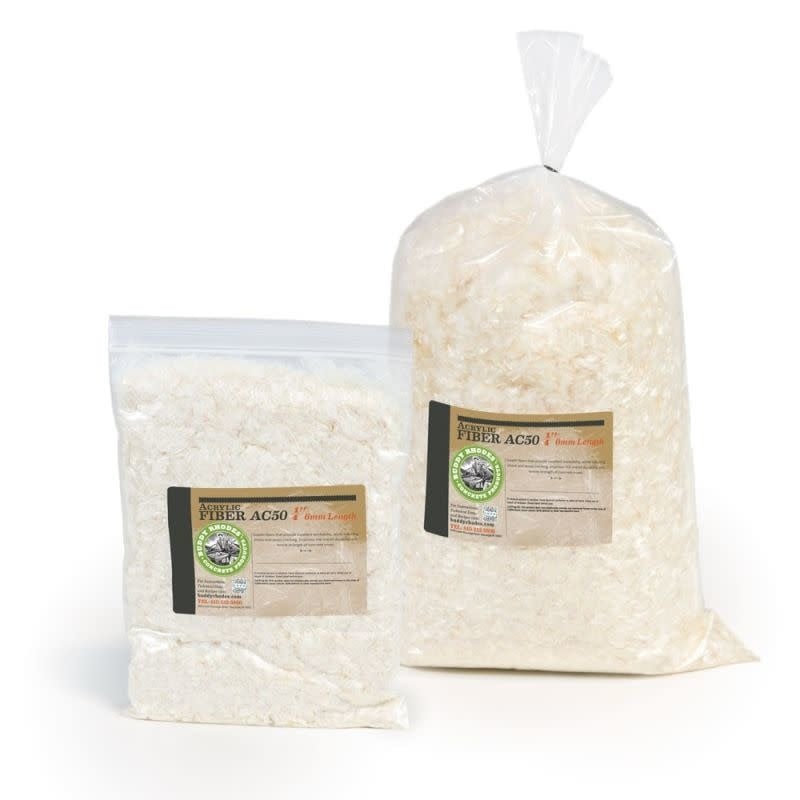
Acrylic AC50 Fibers are modified polymer fibers that greatly enhance the performance and durability of concrete. They drastically reduce plastic shrinkage cracking, provide secondary reinforcement and increased impact resistance.
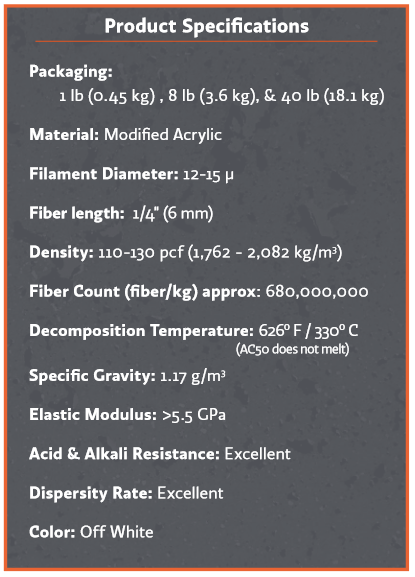
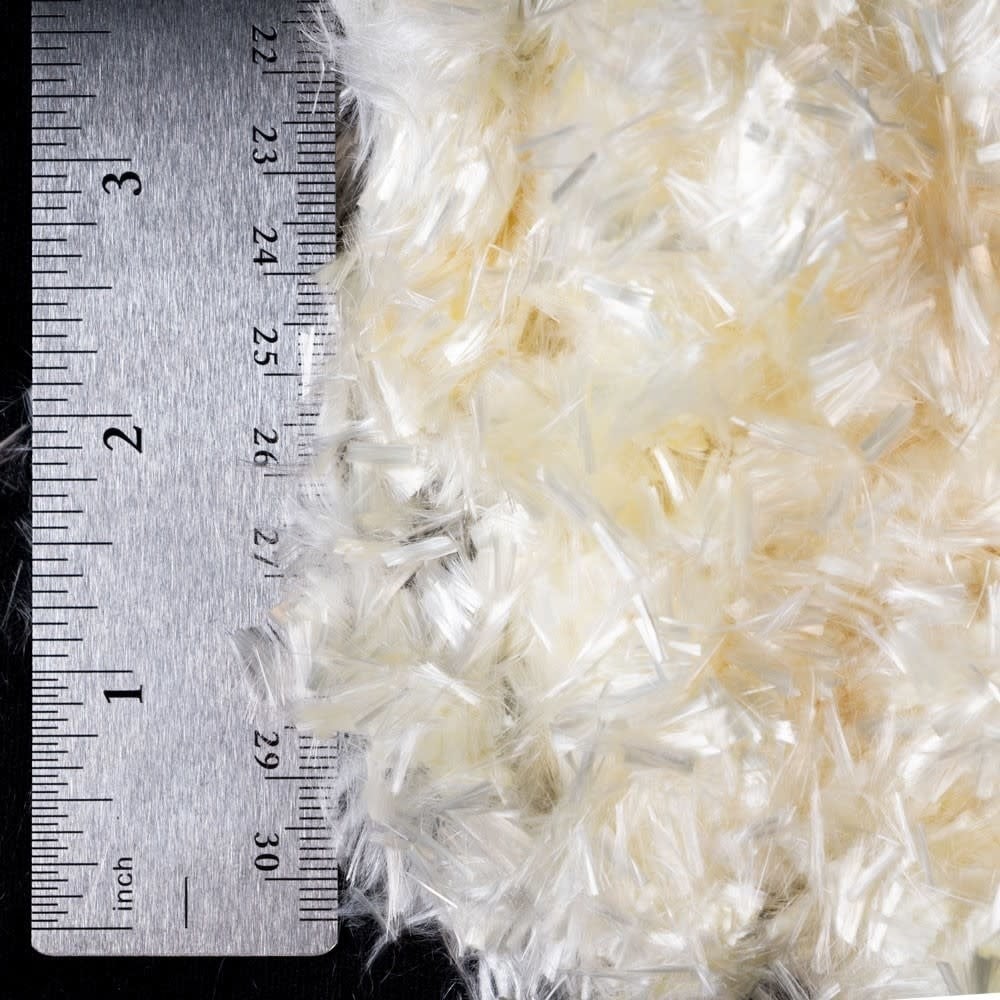
Acrylic AC50 Fibers are 6 mm in length and are the least visible of our fiber offerings, making them best suited for face mixes that require additional reinforcement. They also provide excellent trowelability when blended with either the Craftsman, GFRC or ECC mixes.
Acrylic AC50 fibers are monofilament and have more surface area than bundled fibers. Because of this, they can easily choke up a concrete mix if they are overdosed or not carefully blended in. Some users find blending the fibers in the mix water first provides optimal dispersion. Others prefer to slowly blend the fibers into the concrete later in the mixing process. Some experimentation is suggested to determine the best solution for a specific mix design.
Details & Craftsmanship
Every detail has been carefully considered to bring you the perfect product.
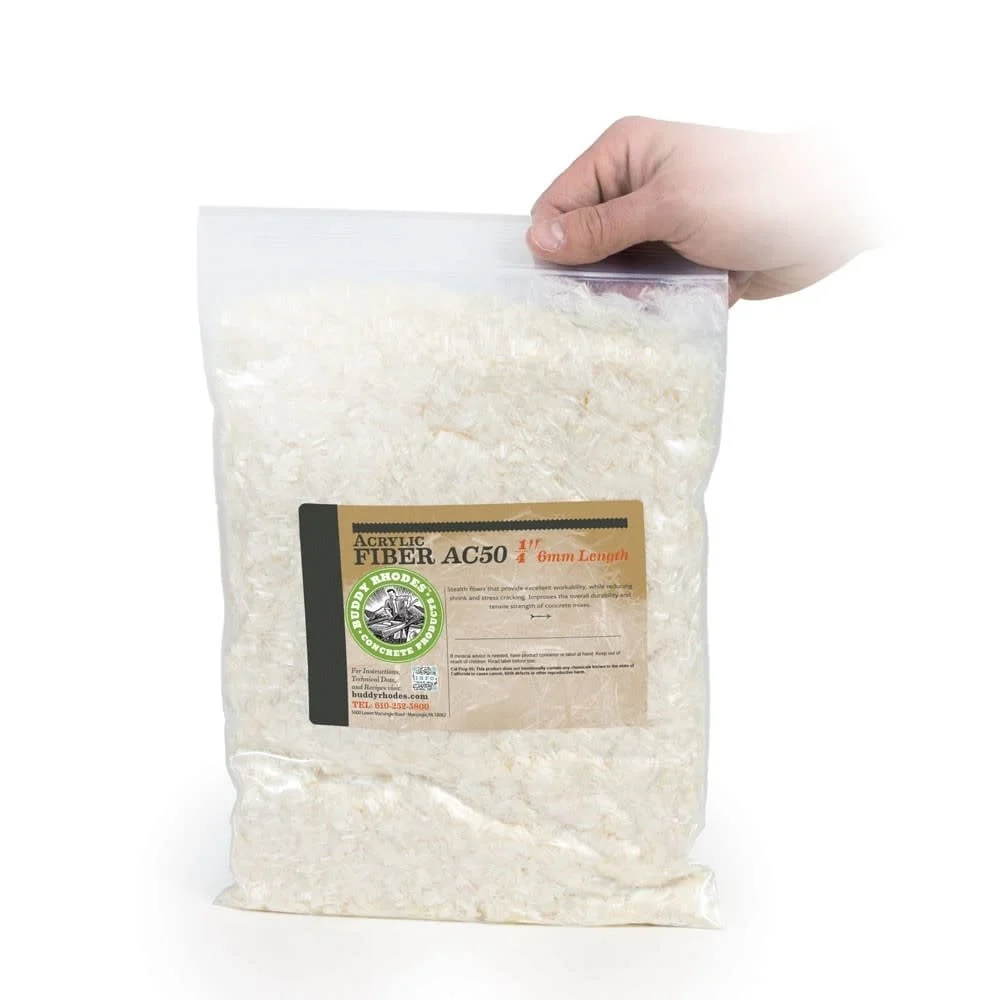
Details & Craftsmanship
Every detail has been carefully considered to bring you the perfect product.
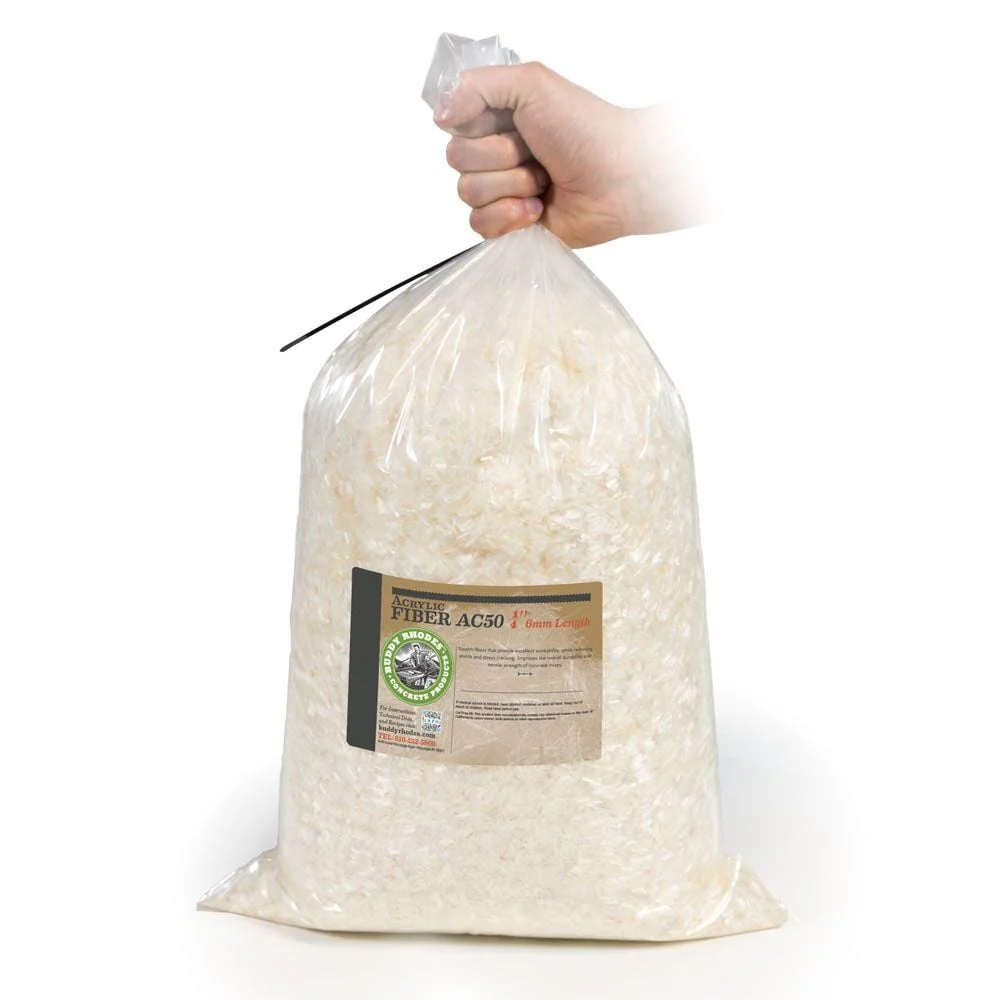
Details & Craftsmanship
Every detail has been carefully considered to bring you the perfect product.
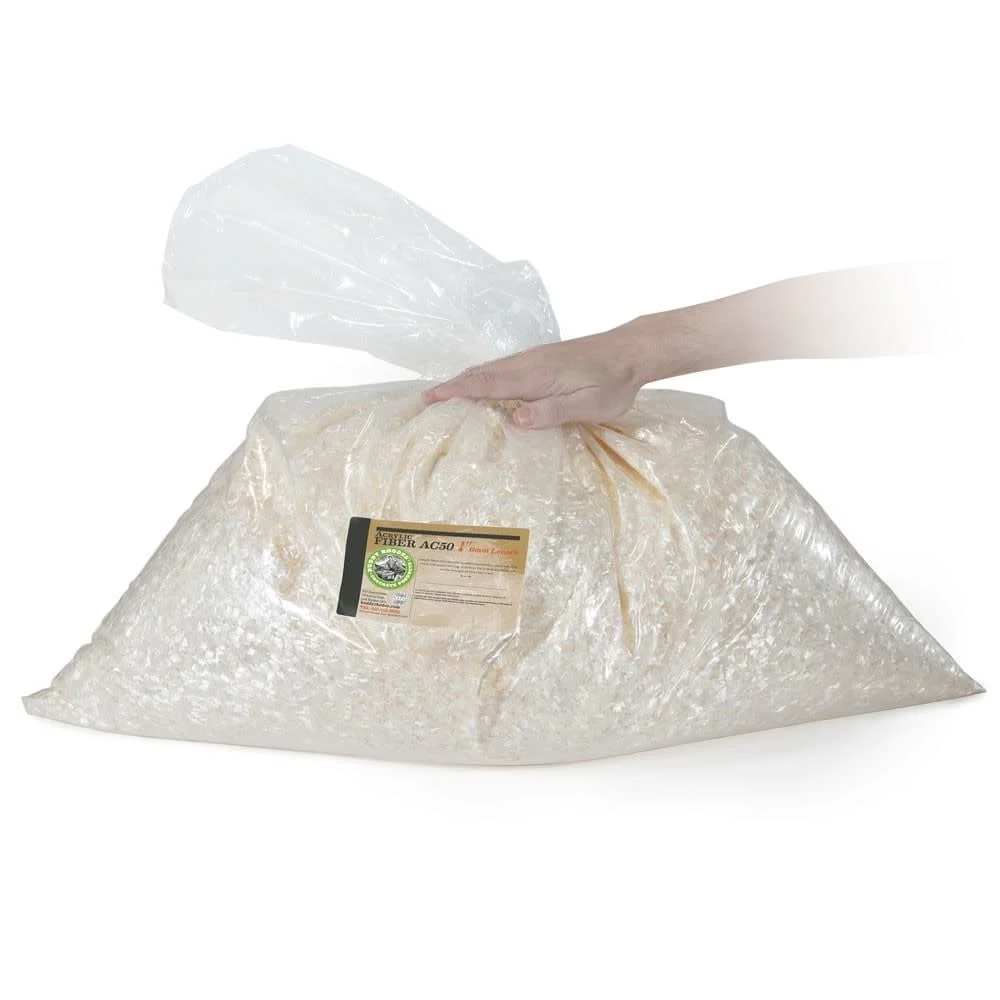
Details & Craftsmanship
Every detail has been carefully considered to bring you the perfect product.
Description
Acrylic AC50 Fibers are modified polymer fibers that greatly enhance the performance and durability of concrete. They drastically reduce plastic shrinkage cracking, provide secondary reinforcement and increased impact resistance.
Acrylic AC50 Fibers are 6 mm in length and are the least visible of our fiber offerings, making them best suited for face mixes that require additional reinforcement. They also provide excellent trowelability when blended with either the Craftsman, GFRC or ECC mixes.
Acrylic AC50 fibers are monofilament and have more surface area than bundled fibers. Because of this, they can easily choke up a concrete mix if they are overdosed or not carefully blended in. Some users find blending the fibers in the mix water first provides optimal dispersion. Others prefer to slowly blend the fibers into the concrete later in the mixing process. Some experimentation is suggested to determine the best solution for a specific mix design.